
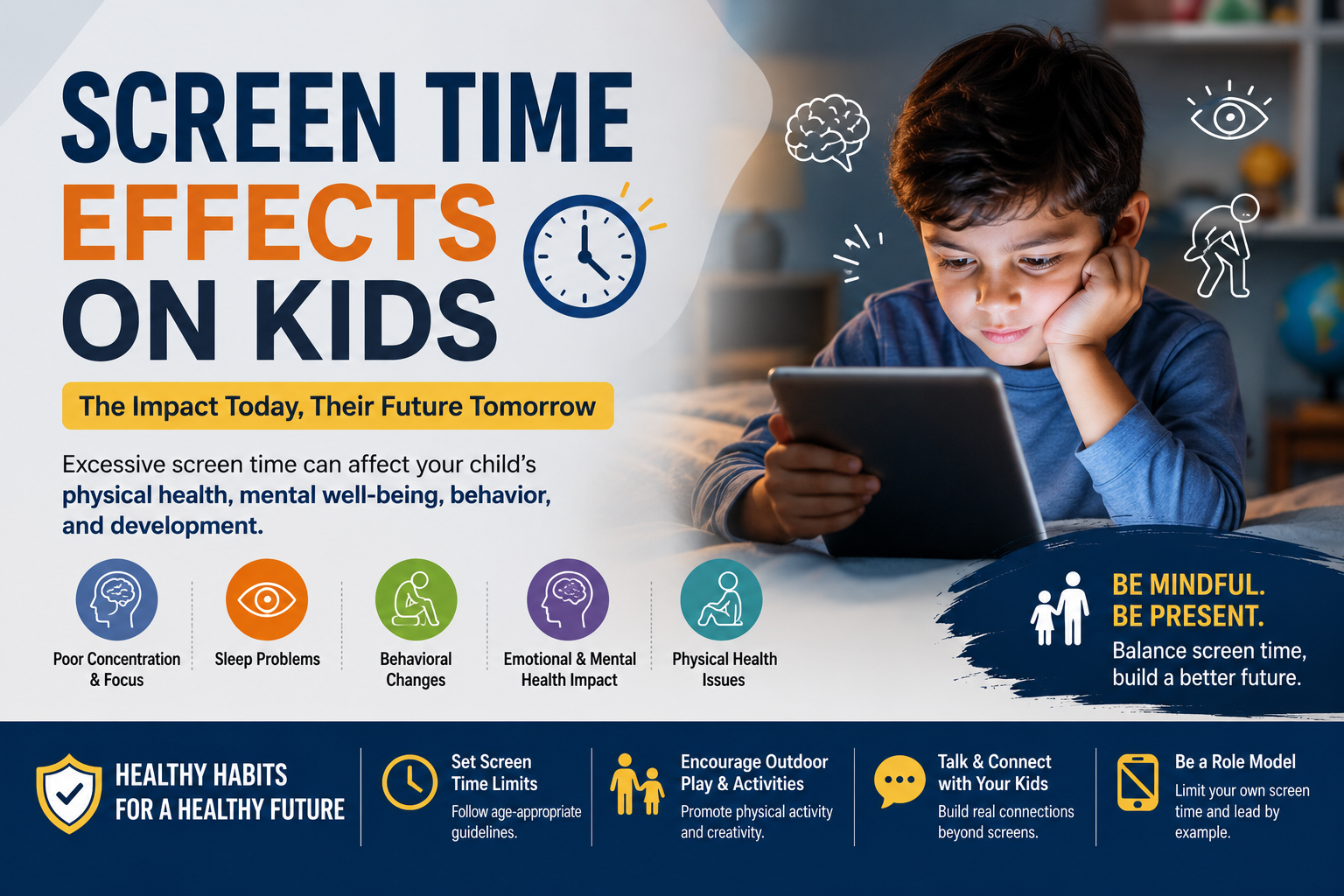
Nowadays, it is hard to imagine the surroundings without screens. From Online Classes, homework, cartoon shows, video games, and smartphones, kids spend many more hours using electronic devices than kids in the past did. While technology made the process of studying and recreation more convenient for the child, too much time spent in front of the screen might affect the child’s well-being physically, psychologically, and emotionally.
It is quite normal for modern parents to deal with screens on a daily basis. The only trouble appears when the screen time takes away the chance of spending time playing outside, sleeping, talking to relatives and other people.
How Excessive Screen Time Affects Children
Impact on Eye Health
One of the common problems of being on the screen for too long includes digital eye strain. It may occur in the form of dry eyes, headaches, and blurred vision that are caused by sitting in front of the screen for too long. Staring at the screen for many hours leads to fatigue and reduced blinking, thus affecting the condition of one’s eyes.
Problems With Sleep
Staying too long in front of the screen, especially at night, can negatively affect one’s sleep pattern. The blue light from the screen affects the natural sleep cycle and causes trouble falling asleep.
Not getting enough sleep results in tiredness and inability to focus.
Physical Inactivity
As the time spent on mobile phones, iPads, or televisions increases, physical activity levels tend to drop. This may cause weight gain, bad posture, lack of endurance, and even an increased risk of developing problems associated with one’s lifestyle.
Effects on Behavior and Mood
Screen time can also have an impact on emotional well-being of a kid. Some children can become irritable and impatient. Additionally, being overly dependent on screens can have an effect on their attention span and ability to regulate emotions.
A lot of parents note the mood change if there is too much screen time for the child or when screen time stops all of a sudden.
Delayed Social Development
Interactions in the real world help kids develop effective communication. Being overly dependent on screens takes away such opportunity from children.
Physical Interaction Builds Confidence and Social Skills
Finding the Right Balance
However, screens are not entirely bad; they may even help in the process of learning and creativity, if used properly. The key is balance.
Parents can find ways to achieve it by putting restrictions on the time kids spend on screens, involving children into some outdoor activity, spending family time without screens, and not using screens when eating or going to bed.
There are several simple things that could be helpful. Firstly, parents should encourage kids to take regular breaks, do some sports and entertain themselves with other activities except screen-based ones.
Supreme Hospital realizes that healthy routines, established in childhood, form the foundation for a healthy future. Putting restrictions on the screen time doesn’t mean that you should quit using technology completely.
It is crucial to remember that a proper development of a kid includes not only learning via screens, but also movement, sleep, play and interaction with people.