
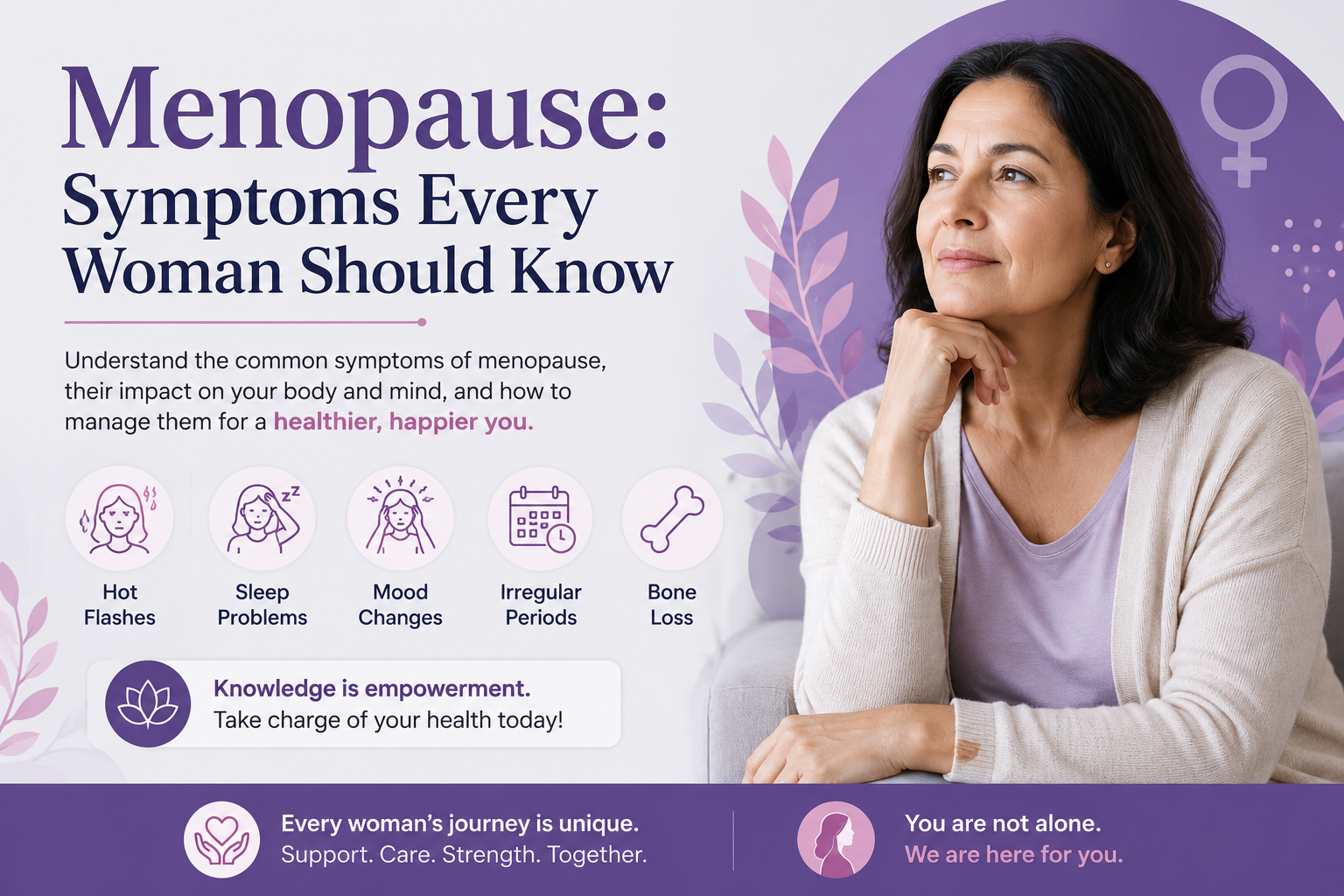
Menopause is a natural stage in a woman’s life, but it’s still something many women hesitate to talk about openly. For some, it can be a smooth transition. There can be an easy transition, but sometimes it can have some physical and emotional effects, which are hard for women to perceive.
Menopause is the natural aging process, which is not connected with any diseases or health conditions. In order to get through it more easily and successfully, one should learn the symptoms that might occur.
The age during which menopause occurs is usually from 45 to 55 years. A Women is considered in her menopuase when she did not have her period for 12 or more months. Before the onset of menopause, a woman undergoes a period called perimenopause. During this period, the hormonal balance changes and the symptoms of menopause appear.
Menopause affects each woman in different ways. Some ladies do not experience anything, except minor changes, and other women suffer from severe symptoms.
Common Symptoms of Menopause
Irregular Periods
This is often one of the first noticeable signs. Periods may become unpredictable. The hot flashes may be light, heavy, short, or more frequent until they finally stop.
Hot Flashes and Night Sweats
Some women experience sudden attacks of heat especially in the region of the face, neck, and chest. The hot flashes could happen anytime of the day, even during nighttime.
Emotional Changes
The hormonal imbalance can also affect one’s mood and make some women irritable, nervous, emotional, and even cause unpredictable mood swings.
Sleep Problems
It can become hard for women to sleep or stay asleep due to menopause. Bad sleep may cause fatigue and lack of energy during the daytime.
Weight Gain
Women usually face metabolic changes which result in increased weight, particularly in the abdominal area.
Vaginal Dryness
Dryness and discomfort from low estrogen levels may cause discomfort in one’s day-to-day life.
Fatigue and Lack of Energy
Feeling fatigued more than usual is yet another symptom of menopause. Even when resting properly, some women may feel particularly exhausted.
Brain Fog
Forgetfulness, lack of concentration, and mental fog are often reported during menopause. While frustrating, these symptoms are usually temporary.
Managing Menopause
Menopause may bring changes, but there are many ways to manage symptoms and maintain good health. Small actions like maintaining a healthy diet, physical activity, sufficient sleep, and lowering stress levels will do wonders.
In addition, regular health checks become crucial in order to prevent diseases such as osteoporosis and heart disease, which often develop at this point in a woman’s life.
Above all else, however, every woman needs to remember that she need not deal alone with the changes of menopause. Consulting a professional will allow her to get through menopause with ease.
At Supreme Hospital, we believe every woman has a right to the same care and support throughout her entire life. Menopause is merely another step in her journey.